
Modern architecture has changed the way we think about buildings. Whether you walk into a corporate office in Lahore, a shopping mall in Karachi, a luxury home in Islamabad, or a hospital in Faisalabad, you'll notice one thing they all have in common.
Glass has become a defining feature of modern construction. It creates brighter interiors, allows natural light to travel through spaces, makes buildings feel larger, and gives both commercial and residential properties a clean, contemporary appearance.
What many people don't notice, however, is that glass itself is only one part of the system. Behind every frameless entrance, glass partition, shower enclosure, curtain wall, or structural glazing project is a collection of carefully engineered hardware that keeps everything secure, aligned, and functioning safely.
In fact, I often tell clients that the glass is what people admire, but the hardware is what actually makes the installation work every single day.That is why Architectural Glass Hardware Pakistan has become such an important part of modern construction.
As buildings across Pakistan continue to adopt larger glass panels and more open designs, the quality of the hardware has become just as important as the quality of the glass itself. Poor hardware can lead to doors that sag, panels that become loose, corrosion that stains expensive finishes, and maintenance problems that could have been avoided from the beginning.
In my experience, the difference between a glass installation that performs flawlessly for years and one that starts causing problems within months usually comes down to hardware selection, installation quality, and ongoing maintenance. Glass rarely fails without a reason. More often, it is poor support, incorrect fittings, or improper installation that creates stress and eventually leads to expensive repairs.
Understanding how architectural glass hardware works and selecting the right Glass and Aluminium Accessories Lahore helps homeowners, architects, builders, and property managers make better decisions before construction even begins. It also helps explain why experienced professionals spend so much time selecting the right fittings instead of simply choosing whatever looks attractive in a catalogue.
What Is Architectural Glass Hardware?
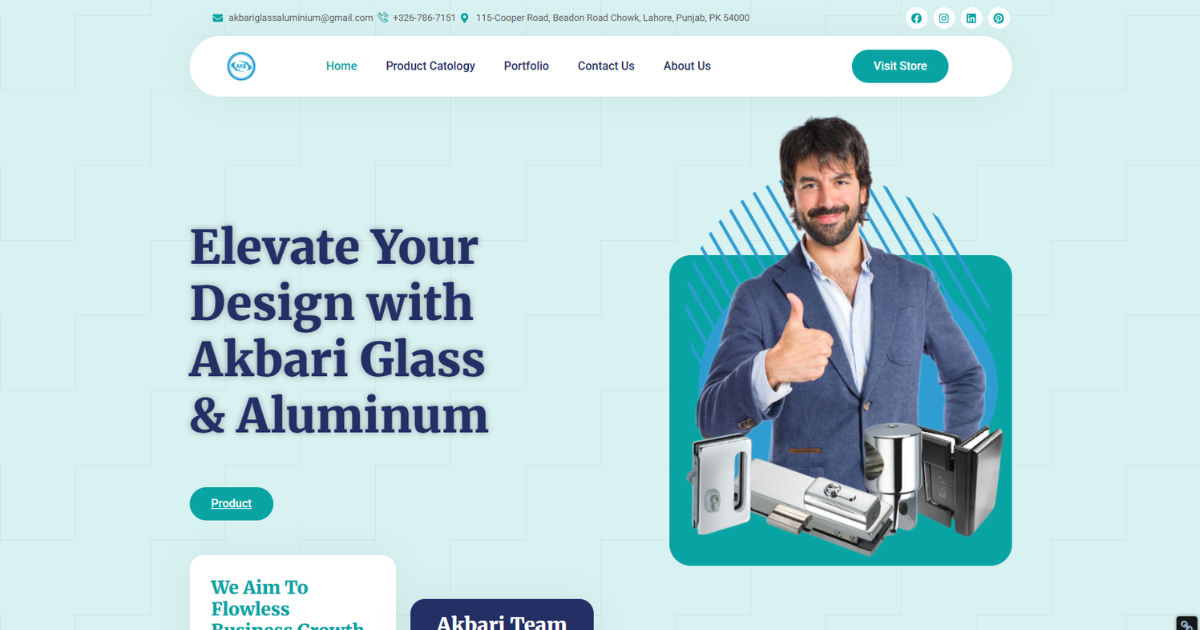
Architectural glass hardware refers to the specialised fittings and support components designed specifically for structural and decorative glass installations. These components include hinges, patch fittings, floor springs, clamps, handles, locks, sliding systems, spider fittings, and many other accessories that allow glass panels to be installed safely while remaining functional and visually appealing.
Unlike ordinary door hardware, architectural glass hardware is designed to work with glass rather than wood or metal. That distinction is far more important than many people realise. Glass cannot simply be drilled, screwed, or modified on site without careful planning. Every hole, notch, and cut-out must usually be prepared during manufacturing because tempered glass cannot be reshaped afterward.
Heavy glass panels also behave very differently from traditional doors. A frameless glass entrance weighing over 100 kilograms places enormous stress on hinges, floor springs, and supporting fittings every time someone opens or closes it. The hardware must distribute those forces evenly without creating pressure points that could weaken the glass over time.
I've visited projects where someone tried to save money by using hardware intended for lightweight applications on large commercial glass doors. The installation looked fine on the day it was completed, but after months of constant use, the doors became difficult to operate, the alignment shifted, and the hardware required repeated adjustments. The glass itself was perfectly good. The problem was that the supporting hardware had never been designed for that level of use.
Today, Architectural Glass Fittings Pakistan are used almost everywhere. Office partitions create open workplaces without sacrificing natural light. Hotels rely on elegant glass entrances to create impressive first impressions. Hospitals use glass doors because they are durable, easy to clean, and allow staff to monitor surrounding areas. Shopping centres install expansive glass storefronts that showcase products while creating inviting entrances. Even residential homes increasingly use frameless shower enclosures, balcony railings, and sliding glass systems to achieve a modern appearance.
Every one of these applications depends on hardware that has been engineered specifically for glass. Without it, even the highest-quality glass would have no practical way of performing safely or reliably.
Why Is Architectural Glass Hardware Pakistan Important?
Provides Structural Support
One of the biggest misconceptions I encounter is that glass somehow supports itself. In reality, glass depends almost entirely on properly designed hardware to remain stable and secure. Every hinge, clamp, patch fitting, and spider fitting has the job of transferring loads safely into the surrounding structure.
When professionals design a glass installation, they are not simply deciding where to place the hardware. They are calculating how the weight of the glass will be distributed, how people will use the system every day, and how movement, vibration, and environmental conditions will affect the installation over many years.
This becomes especially important in commercial buildings where doors may open thousands of times each week. Hardware absorbs repeated movement while keeping panels properly aligned. If that support is inadequate, the glass begins carrying loads it was never designed to handle.
In structural glazing projects, the hardware effectively becomes part of the building's structural system. It connects large glass panels to steel or aluminium framing while allowing controlled movement caused by wind, temperature changes, and building settlement.
Improves Safety
Safety is probably the most important reason professionals invest in quality Glass Hardware Pakistan. Glass may be strong, but it is not forgiving when subjected to uneven stress or improper installation.
Quality hardware helps distribute loads evenly across the glass, reducing the likelihood of stress concentrations around drilled holes and cut-outs. It also keeps panels securely fixed during daily operation, reducing movement that could eventually weaken the installation.
I have inspected buildings where cheap hinges developed excessive play after relatively short periods. The resulting movement placed extra pressure on the glass edges every time the doors opened and closed. Eventually, tiny chips appeared near the hardware, followed by cracks that required complete panel replacement.
Quality hardware also improves user safety by providing controlled door movement. Properly adjusted floor springs prevent heavy glass doors from slamming shut, reducing the risk of injury while protecting both the hardware and the glass itself.
Ensures Smooth Daily Operation
Most people only notice architectural glass hardware when something stops working properly.
A well-designed glass door should open smoothly, close consistently, and remain properly aligned throughout years of daily use. Good hardware makes that happen almost unnoticed.
Commercial buildings such as banks, office towers, shopping centres, and hospitals depend on reliable operation because thousands of people may use the same entrances every day. Hardware that sticks, binds, or becomes difficult to operate quickly creates inconvenience and increases maintenance costs.
In my experience, premium Glass Door Hardware Pakistan rarely feels dramatic. It simply performs consistently. Doors close gently, handles remain secure, locks engage correctly, and moving parts continue operating with minimal effort.
Poor-quality hardware usually follows the opposite pattern. Initially everything appears acceptable, but small problems gradually become noticeable. Doors become harder to open, closing speeds change, alignment shifts, and repeated adjustments become necessary.
These issues may seem minor individually, but together they create a building that feels poorly maintained, even when the glass itself remains in excellent condition.
Extends the Lifespan of Glass Installations
A glass installation represents a significant investment. Naturally, owners expect it to remain attractive and functional for many years.
High-quality hardware protects that investment by reducing unnecessary stress throughout the entire system. Components manufactured with tighter tolerances maintain proper alignment, minimise movement, and resist wear much better than cheaper alternatives.
I've worked on projects where premium Stainless Steel Glass Hardware continued performing reliably after more than a decade with only routine maintenance. On the other hand, I've also seen inexpensive hardware require replacement within just a few years because corrosion, worn bearings, or loose connections affected the entire installation.
When hardware lasts longer, everything connected to it benefits as well. Glass panels remain properly supported, seals continue functioning correctly, and maintenance becomes more predictable instead of reactive.
Over the life of a building, investing in better hardware often costs less than repeatedly replacing inferior components and repairing the damage they create.
Enhances Modern Architectural Design
Architects love working with glass because it creates open, bright, and visually connected spaces. Hardware plays a surprisingly important role in achieving that vision.
Modern Frameless Glass Hardware is designed to provide strength without dominating the appearance of the installation. Slim patch fittings, concealed floor springs, polished stainless steel clamps, and minimalist handles allow the glass itself to remain the visual focus.
In luxury homes, this creates elegant shower enclosures and staircase balustrades. In office buildings, it produces clean partition systems that encourage collaboration while maintaining acoustic separation. In retail environments, it creates welcoming storefronts that maximise product visibility.
Good hardware complements architecture rather than competing with it. It supports the design while remaining visually understated.
I've noticed that experienced architects often spend considerable time selecting finishes because hardware should integrate with surrounding materials such as stone, timber, aluminium, and stainless steel instead of appearing as an afterthought.
Supports Large Glass Panels
Modern buildings increasingly use larger glass panels than ever before. Advances in manufacturing now allow expansive sheets of tempered and laminated glass to create dramatic entrances, facades, and partitions.
Larger panels naturally weigh much more, placing greater demands on the supporting hardware.
Commercial Glass Hardware designed for these applications undergoes rigorous engineering to ensure it can safely support substantial loads while maintaining smooth operation. Hinges must carry heavier doors without sagging. Spider fittings must resist wind loads across entire facades. Sliding systems must move large panels effortlessly despite their weight.
I've seen projects where oversized glass was paired with hardware designed for much smaller panels simply because it looked similar. Within months, hinges began wearing prematurely and doors no longer aligned correctly.
Professional installers always match hardware capacity to actual panel dimensions, thickness, and operating conditions rather than relying on appearance alone.
Performs Well in Pakistan's Climate
Pakistan presents environmental conditions that place unique demands on architectural hardware.
In coastal cities such as Karachi, high humidity and salt in the air accelerate corrosion. Inland cities experience intense summer temperatures followed by cooler winters, causing repeated expansion and contraction of building materials. Dust is another constant challenge across many regions, especially around construction sites and busy urban areas.
These conditions make material selection particularly important.
High-quality Stainless Steel Glass Hardware, especially marine-grade stainless steel in demanding environments, resists corrosion far better than lower-grade materials. Proper surface finishes also make cleaning easier while reducing long-term staining and deterioration.
Temperature fluctuations affect door alignment and moving components, so well-engineered hardware includes appropriate tolerances that accommodate slight movement without sacrificing performance.
From what I've seen on numerous projects, hardware that performs perfectly in a controlled showroom may behave very differently after several years exposed to Pakistan's real climate. Choosing products designed for these conditions helps prevent corrosion, premature wear, and unnecessary maintenance while ensuring the entire glass installation continues performing as intended.
Types of Architectural Glass Hardware
Every successful glass installation works as a complete system rather than a collection of individual parts. One fitting supports another, and every component has a specific purpose. Choosing the right hardware is not simply about appearance. It is about ensuring that every piece works together safely and reliably throughout the life of the building.
Glass hinges are responsible for supporting glass doors while allowing smooth and controlled movement. Their design must match both the weight and thickness of the glass panel. A hinge that is slightly undersized may appear acceptable during installation but can begin sagging after months of regular use. This is why experienced installers always check load ratings instead of selecting hinges based only on their finish or appearance.
Patch fittings are among the most recognisable components in frameless glass systems. Rather than gripping the entire edge of a panel, they secure glass at carefully prepared cut-outs and connect doors or fixed panels to surrounding hardware. They play a major role in maintaining alignment and distributing loads across the glass. Good patch fittings feel solid during operation, while poor-quality versions often develop movement that eventually affects the entire installation.
Floor springs are the hidden workhorses of many commercial entrances. Installed beneath the floor, they carry the weight of heavy glass doors while controlling their opening and closing motion. A properly adjusted floor spring allows even a large glass door to move smoothly and return gently to its closed position. When floor springs are poorly selected or incorrectly installed, doors may slam, fail to close completely, or become difficult to operate.
Door closers serve a similar purpose in applications where overhead systems are more suitable. They ensure controlled movement, improve security, and reduce wear by preventing doors from being forced shut. In offices, hospitals, and educational institutions, reliable closing action also helps maintain privacy and environmental control.
Glass clamps are often overlooked because they appear relatively simple, yet they perform an essential supporting role. They secure fixed glass panels, balustrades, partitions, and railings while protecting the edges of the glass from concentrated pressure. Quality clamps use precise machining and suitable gaskets to create a secure connection without damaging the glass surface.
Door handles contribute far more than appearance. They must provide a comfortable grip, resist daily wear, and remain firmly attached despite constant use. In high-traffic commercial buildings, handles experience thousands of operating cycles every month, making material quality and manufacturing precision especially important.
Spider fittings are commonly used in structural glazing and modern glass facades where large glass panels need minimal visible framing. These fittings transfer structural loads back to the supporting steel framework while preserving the open, transparent appearance that architects seek. Even small installation errors can affect the alignment of an entire facade, so careful planning and precise installation are essential.
Sliding door systems have become increasingly popular in homes, offices, and commercial spaces because they maximise usable floor area while creating wide, unobstructed openings. Their performance depends heavily on the quality of rollers, tracks, guides, and supporting hardware. I've seen beautifully designed sliding systems become frustrating to use simply because inferior rollers wore out prematurely.
Glass locks complete many frameless installations by providing security without compromising aesthetics. Whether used in offices, retail stores, or residential applications, they must integrate with the surrounding hardware while operating smoothly and reliably. A well-designed lock feels like a natural part of the system rather than an added accessory.
When all of these components are properly matched, they create a glass installation that feels effortless to use. When even one component is selected incorrectly, the entire system often begins to suffer.
Where Architectural Glass Hardware Is Used
Architectural glass hardware has become an essential part of modern construction because glass is now used in far more places than traditional windows and doors. Today's buildings rely on glass to improve natural lighting, create open interiors, and present a contemporary appearance, but none of these applications would function without dependable hardware supporting every panel.
In commercial offices, glass partition hardware creates meeting rooms, executive offices, and collaborative workspaces while allowing daylight to spread throughout the building. Shopping malls depend on frameless entrances and retail storefronts that attract customers while standing up to constant daily traffic. Hotels use glass extensively in entrance lobbies, guest bathrooms, restaurants, and conference facilities because it combines elegance with practicality.
Hospitals and healthcare facilities often install glass doors and partitions because they are durable, easy to maintain, and help staff maintain visibility between different areas. Banks and financial institutions rely on secure glass systems that combine transparency with controlled access, while restaurants use glass partitions and entrances to create bright, welcoming dining spaces.
Residential construction has also embraced modern glass systems. Luxury homes increasingly feature frameless shower enclosures, staircase balustrades, balcony railings, sliding patio doors, and decorative partitions that make interiors feel more spacious. Office developers frequently incorporate curtain walls and structural glazing into their building exteriors, creating striking facades that define modern skylines across Pakistan.
Educational institutions, airports, exhibition centres, corporate headquarters, and industrial office complexes all depend on architectural glass hardware for reliable performance. Although each building has different requirements, the principle remains the same. The glass may define the appearance of the space, but the hardware determines how safely, smoothly, and reliably that space performs every day.
Materials Used in Architectural Glass Hardware Pakistan
The material used to manufacture architectural glass hardware has a much greater impact on performance than many people realise. People often focus on the appearance of a polished finish or a stylish handle, but professionals usually ask a different question first. What is this hardware made from, and will it survive the environment where it is being installed?
I've inspected projects where hardware still looked excellent after fifteen years, and others where visible corrosion appeared within two or three years. In most cases, the difference was not maintenance alone. It was the choice of material from the very beginning.
Stainless Steel 304 is the most widely used material in Architectural Glass Hardware Pakistan because it offers an excellent balance between durability, corrosion resistance, appearance, and cost. It performs well in offices, homes, shopping centres, educational institutions, and most indoor commercial environments. It resists ordinary moisture and daily wear while maintaining its finish with relatively little maintenance. For the majority of indoor installations across Pakistan, Stainless Steel 304 remains a dependable and economical choice.
Stainless Steel 316 is often considered the premium option because it contains additional elements that significantly improve corrosion resistance. This becomes particularly valuable in coastal areas such as Karachi, where salt in the air accelerates rust on lower-grade metals. Outdoor facades, swimming pool areas, luxury hotels, and marine environments benefit greatly from Stainless Steel 316 because it continues performing under conditions that would quickly damage cheaper alternatives. Although it costs more initially, it often reduces replacement and maintenance expenses over the long term.
Aluminium is another popular material because it is lightweight, naturally resistant to corrosion, and easy to fabricate into different shapes. It is commonly used in sliding systems, curtain walls, and supporting framework rather than heavily loaded fittings. Aluminium performs well in many applications, although it generally cannot match the strength of stainless steel when supporting very heavy glass panels.
Brass has long been appreciated for its attractive appearance and excellent machining properties. It is frequently chosen for decorative fittings in luxury homes, boutique hotels, and heritage restoration projects where aesthetics are especially important. Brass develops a natural patina over time, which some designers appreciate, although others prefer finishes that maintain a consistent appearance with less maintenance.
Zinc alloy is widely used in lower-cost decorative hardware because it can be manufactured efficiently into complex shapes. While it may be suitable for light-duty residential applications, I would hesitate to recommend it for demanding commercial environments where heavy daily use is expected. I've seen zinc alloy fittings perform adequately in low-traffic areas, but they generally do not provide the same long-term durability as quality stainless steel.
Pakistan's climate presents additional challenges that make material selection even more important. High temperatures, seasonal humidity, dust, pollution, and coastal salt exposure all influence how hardware performs over time. In my experience, investing in higher-grade materials during construction almost always proves more economical than replacing deteriorated hardware several years later.
How Quality Glass Hardware Improves Building Safety
Safety in architectural glass systems is rarely the result of one single component. Instead, it comes from an entire system working together exactly as intended. Every hinge, clamp, patch fitting, floor spring, and anchor contributes to keeping glass secure under both everyday use and unexpected conditions.
One of the most important functions of quality hardware is proper load distribution. Large glass panels are surprisingly heavy, and that weight must be transferred safely into the building structure without concentrating excessive stress at individual fixing points. Well-designed hardware spreads these forces across larger areas, reducing the risk of cracking around drilled holes or cut-outs.
Secure fixing is equally important. Even slight movement between hardware and glass can gradually increase wear, loosen connections, and create stress that was never part of the original design. High-quality fittings maintain firm, consistent connections that minimise unwanted movement throughout years of operation.
Buildings are constantly subjected to wind, vibration, and thermal movement. Curtain walls and structural glazing systems must accommodate these forces without compromising safety. Properly engineered hardware allows controlled movement where necessary while maintaining structural stability.
Impact resistance also benefits from quality hardware. Doors that close gently rather than slamming experience far less stress over time. Similarly, accurately aligned hardware prevents glass edges from contacting surrounding structures during operation, reducing the likelihood of chips and cracks.
I've occasionally seen installations where small alignment errors created surprisingly large long-term problems. A door that rubs slightly against the floor or frame every day may seem like a minor inconvenience, but after thousands of operating cycles, that repeated stress can damage both the hardware and the glass itself.
Edge protection is another area professionals pay close attention to. Glass edges are among the most vulnerable parts of any panel. Quality clamps, gaskets, and supporting fittings help protect those edges from direct contact with metal components while maintaining secure support.
When every component performs correctly, the result is not simply a beautiful installation. It is a building that remains safe, reliable, and predictable for everyone who uses it.
Why Hardware Quality Matters More Than Many People Realise
People naturally spend considerable money choosing premium glass, yet many underestimate the importance of the hardware supporting it. In reality, expensive glass cannot compensate for poor-quality fittings.
One mistake I see quite often is allocating most of the project budget to the glass itself while treating the hardware as an area where money can be saved. Initially, everything may appear satisfactory because new hardware often looks attractive regardless of its internal quality. Problems usually emerge only after months or years of regular use.
Loose patch fittings, worn hinges, corroded clamps, sticking floor springs, leaking sliding systems, and doors that refuse to align properly are all issues that commonly originate from inferior hardware rather than defective glass. Once these problems develop, they frequently affect other components, leading to increasingly expensive repairs.
Poor hardware can also increase maintenance requirements dramatically. Instead of simple routine servicing, building owners may find themselves replacing worn components repeatedly, adjusting doors every few months, or repairing damage caused by corrosion and movement.
From my experience, quality Commercial Glass Hardware should be viewed as an investment rather than an expense. Good fittings continue performing quietly in the background for years, allowing owners to focus on operating their buildings instead of constantly dealing with avoidable maintenance issues.
How to Choose the Right Architectural Glass Hardware Pakistan
Selecting hardware should never begin by looking at finishes or catalogue photographs. Professionals start by understanding exactly what the installation must achieve because every project places different demands on the hardware.
Glass thickness is one of the first considerations. Hardware designed for 10 mm glass cannot simply be installed on 12 mm or 15 mm panels without affecting performance. Manufacturers engineer their fittings for specific thickness ranges to ensure proper support and secure clamping.
Panel weight is equally critical. Larger glass doors require hinges, floor springs, and sliding systems capable of carrying substantial loads throughout many years of operation. Ignoring weight ratings is one of the fastest ways to create premature wear and alignment problems.
Traffic levels also influence hardware selection. A frameless door in a private residence experiences very different operating conditions compared to a shopping mall entrance that opens hundreds of times every day. Commercial applications require components designed for much higher operating cycles and greater durability.
Indoor and outdoor environments require different approaches as well. Outdoor installations face rain, humidity, pollution, ultraviolet exposure, and temperature fluctuations that accelerate wear. In these situations, corrosion resistance becomes a major priority, making higher-grade Stainless Steel Glass Hardware an excellent investment.
Material grade should always be verified rather than assumed. Unfortunately, fittings that appear identical externally may differ significantly in manufacturing quality, internal components, and metal composition. Experienced buyers often request certification or purchase from reputable Glass Hardware Suppliers Pakistan with established quality standards.
Finish selection is not purely decorative either. Brushed, polished, satin, and powder-coated finishes all behave differently in terms of maintenance, fingerprints, cleaning, and resistance to visible scratches. Choosing a finish that matches both the building design and expected maintenance programme leads to better long-term satisfaction.
Compatibility between different components is another factor professionals evaluate carefully. Hinges, locks, patch fittings, handles, and floor springs should work together as one integrated system. Mixing incompatible products from different manufacturers sometimes creates alignment issues that are difficult to correct later.
Finally, I always encourage clients to think about replacement parts before making a purchase. Buildings remain in service for decades, and components occasionally require servicing. Hardware from established Glass Fittings Manufacturers Pakistan or recognised international brands is generally much easier to maintain because spare parts remain available long after installation.
Common Mistakes When Selecting Glass Hardware
Many hardware problems begin long before installation. They start during product selection, when decisions are based on appearance or price rather than technical requirements.
Buying solely on cost is probably the most common mistake. Everyone wants to control project expenses, but choosing the cheapest available hardware often results in significantly higher maintenance and replacement costs later. Saving a relatively small amount during construction can become very expensive over the life of the building.
Another mistake is selecting decorative hardware for structural applications. Some fittings look impressive but are designed only for light-duty use. Installing them on heavy commercial doors or large structural glazing systems places them under loads they were never intended to carry.
Ignoring manufacturer weight limits is equally risky. Every hinge, floor spring, clamp, and sliding mechanism has specific operating capacities. Exceeding those limits gradually reduces reliability and may compromise safety.
Unsuitable material selection also creates avoidable problems. Installing hardware with poor corrosion resistance in coastal environments almost guarantees future deterioration. Likewise, using lightweight residential fittings in busy commercial buildings often leads to premature wear.
Poor installation practices remain another major source of failure. Even excellent hardware cannot perform properly if measurements are inaccurate, holes are misaligned, anchors are unsuitable, or tightening forces exceed manufacturer recommendations.
Finally, maintenance is often overlooked entirely. Many owners assume glass hardware requires no attention after installation. In reality, routine inspections, cleaning, lubrication, and occasional adjustments keep systems operating smoothly for many years. Ignoring maintenance allows small issues to develop into costly repairs that could have been prevented with minimal effort.
Installation Best Practices
Even the highest-quality architectural glass hardware can fail if it is installed incorrectly. In my experience, installation quality often makes a bigger difference than the product itself. A premium hinge, floor spring, or patch fitting cannot compensate for inaccurate measurements, poor alignment, or incorrect fixing methods.
Before installation begins, professionals carefully verify glass dimensions, hardware positions, opening sizes, and surrounding structures. Glass systems require much greater precision than traditional doors because there is very little room for adjustment once tempered glass has been manufactured. A small measurement mistake can create alignment problems that affect the entire installation.
Drilling and preparation of glass must always be completed according to manufacturer specifications. Random modifications on site can weaken the glass or create unnecessary stress points. Experienced glass fabricators understand that every hole, cut-out, and edge preparation must be carefully planned before the glass reaches the installation location.
Correct alignment is another critical factor. Frameless glass doors, partitions, and facades depend on accurate positioning because even a slight deviation can affect operation. A door that is not perfectly aligned may place uneven pressure on hinges, locks, and floor springs, eventually causing premature wear.
Suitable anchors and fixing materials are also essential. Hardware must be securely connected to the supporting structure, not simply attached to surface finishes that cannot handle the required loads. This is especially important in commercial buildings where glass systems experience continuous daily use.
Controlled tightening is another area where experience matters. Over-tightening fittings can damage glass by creating excessive pressure, while under-tightening can allow movement and instability. Professional installers understand the balance required to achieve secure support without stressing the glass.
After installation, a complete inspection should be carried out. Doors should open and close smoothly, locks should engage correctly, panels should remain properly aligned, and all fittings should be checked for secure installation. A careful final inspection prevents small issues from becoming expensive problems later.
A properly installed glass system should feel effortless. When users notice difficulty, noise, movement, or inconsistent operation, it is often a sign that something was overlooked during installation.
Maintenance Tips for Long-Term Performance
Many people assume that once architectural glass hardware is installed, it will continue working indefinitely without attention. While quality hardware is designed for long service life, regular maintenance is still necessary to protect performance and appearance.
Routine cleaning is one of the simplest but most effective maintenance steps. Dust, construction particles, fingerprints, and environmental pollutants can accumulate around moving components and finishes. In Pakistan, where dust levels can be high in many urban areas, regular cleaning helps prevent unnecessary wear.
Moving parts such as hinges, sliding rollers, and door mechanisms should be inspected periodically. Lubrication may be required for certain components, but it should always be carried out using suitable products recommended for the hardware type. Using incorrect lubricants can sometimes attract dust or damage internal mechanisms.
Corrosion checks are particularly important for buildings located near coastal areas or places exposed to humidity. Small signs of surface deterioration should be addressed early before corrosion spreads and affects the strength or appearance of the hardware.
Loose fittings should never be ignored. A handle that moves slightly, a clamp that appears unstable, or a door that no longer closes correctly may seem like minor issues, but they often indicate developing problems. Early adjustment is usually simple and inexpensive compared to replacing damaged components later.
Alignment inspections are also valuable, especially for heavily used commercial doors. Changes in building movement, frequent usage, or natural settling can gradually affect door positioning. Regular checks help maintain smooth operation and reduce stress on the glass.
For large commercial projects such as shopping malls, hospitals, hotels, and office towers, scheduled maintenance programmes are especially important. Facility managers who monitor glass systems regularly usually experience fewer unexpected failures because problems are identified before they become serious.
I've seen buildings where basic maintenance was ignored for years, resulting in damaged floor springs, worn-out rollers, and expensive replacement work. On the other hand, installations that received simple routine attention continued operating smoothly long after their expected service period.
Maintenance is not about fixing problems after they occur. It is about protecting the original investment and ensuring that the building continues to look and perform as intended.
Why Demand for Architectural Glass Hardware Pakistan Is Growing
The demand for Architectural Glass Hardware Pakistan continues to increase because construction trends across the country are changing rapidly. Modern buildings are moving away from heavy traditional designs and embracing open spaces, natural lighting, transparency, and minimalist architectural styles.
Commercial developments are one of the biggest drivers of this growth. New office buildings, shopping malls, hotels, and corporate headquarters increasingly use glass entrances, partitions, facades, and interior systems to create professional and contemporary environments. These projects require reliable Glass Hardware Pakistan that can handle demanding daily usage while maintaining a premium appearance.
Residential construction is also contributing to increased demand. Homeowners are investing in modern kitchens, bathrooms, balconies, staircases, and living spaces where glass creates a sense of openness and luxury. Frameless shower enclosures, sliding glass doors, and decorative partitions have become common features in high-end homes.
Architects and interior designers are also exploring more creative applications of glass because improved hardware technology has expanded what is possible. Larger panels, cleaner designs, and minimal framing allow designers to achieve visual effects that were difficult to create in the past.
Pakistan's growing hospitality sector has further increased demand for premium architectural fittings. Hotels and restaurants understand that entrances, interiors, and guest spaces strongly influence customer perception. High-quality glass systems help create modern environments while offering practical benefits such as easy cleaning and better space utilisation.
The availability of better products from Glass Fittings Manufacturers Pakistan and international suppliers has also improved the market. Builders and contractors now have access to a wider range of options, allowing them to select hardware based on application rather than simply choosing whatever is available.
However, increased demand has also made product knowledge more important. As more companies offer Glass Door Fittings and Architectural Glass Fittings Pakistan, buyers must understand the difference between appearance and actual performance. A fitting may look impressive in a showroom but still fail if it is not suitable for the building environment.
The future of architectural glass systems in Pakistan will likely continue moving toward larger glass areas, smarter designs, and higher performance expectations. As this happens, the importance of selecting reliable hardware will become even greater.
Conclusion
Architectural glass hardware is one of the most important yet frequently overlooked parts of modern building design. People usually notice the beauty of glass first, but the hidden components behind that glass determine whether the installation remains safe, functional, and attractive for years.
From my experience working around glass systems, the difference between a successful installation and a problematic one rarely comes down to the glass alone. It comes from understanding the complete system. The right hardware supports the glass, controls movement, improves safety, reduces maintenance, and allows architects to achieve designs that would otherwise not be possible.
Choosing quality Architectural Glass Hardware Pakistan is not simply about buying better-looking fittings. It is about protecting the entire investment. A poorly selected component can create problems throughout the system, while properly engineered hardware quietly performs its job every day without attracting attention.
Whether it is a small residential shower enclosure or a large commercial glass facade, the same principles apply. Hardware must match the glass, the environment, the expected usage, and the long-term requirements of the building. Price should always be considered, but it should not be the only deciding factor.
Professional advice, correct installation, and regular maintenance are what transform a collection of glass panels and fittings into a reliable architectural system. When planning any glass project, choosing quality hardware from trusted Glass Hardware Suppliers Pakistan and focusing on long-term performance will always provide better value than selecting the cheapest option available.
A well-designed glass installation should not only look impressive on the day it is completed. It should continue working smoothly, safely, and beautifully for many years afterward.
FAQs
Why is architectural glass hardware important in modern buildings?
Architectural glass hardware is important because it provides the essential support system that allows glass installations to function safely and effectively. While glass creates the visual appeal of modern architecture, the hardware is responsible for carrying weight, controlling movement, maintaining alignment, and keeping the entire system stable. Every time a glass door opens, closes, slides, or locks, the hardware absorbs the forces created by that movement.
In modern buildings such as offices, shopping malls, hotels, hospitals, and luxury homes, glass systems are expected to operate smoothly for many years under regular use. High-quality hardware helps prevent problems such as loose fittings, door sagging, misalignment, vibration, and premature glass damage. Without properly selected hardware, even expensive glass can fail to perform as expected. This is why professionals consider architectural glass hardware a critical part of the complete building system rather than just a decorative accessory.
Which material is best for architectural glass hardware in Pakistan?
The best material for architectural glass hardware depends on where and how the hardware will be used. Stainless Steel 304 is one of the most commonly selected materials in Pakistan because it provides a good combination of strength, appearance, corrosion resistance, and cost effectiveness. It works well for many indoor applications, including office partitions, residential glass doors, and commercial interiors.
For more demanding environments, Stainless Steel 316 is often the better choice because it provides higher resistance against corrosion, especially in coastal regions such as Karachi or areas exposed to moisture and harsh weather conditions. Outdoor glass facades, swimming pool areas, luxury hotels, and marine environments usually benefit from higher-grade stainless steel.
In my experience, choosing the correct material is less about selecting the most expensive option and more about matching the hardware to the environment. A good-quality material that suits the application will usually provide better long-term value than a cheaper material that requires frequent replacement.
Can poor-quality architectural glass hardware damage glass panels?
Yes, poor-quality architectural glass hardware can contribute to damage in glass panels, especially when the hardware is unable to properly support the weight or movement of the system. Glass is a strong material, but it is also sensitive to concentrated stress. If fittings are poorly manufactured, incorrectly sized, or improperly installed, they can create pressure points around fixing areas that may eventually lead to chips, cracks, or complete panel failure.
A common mistake is assuming that the glass itself is always the cause of a problem. In many real-world situations, the actual issue comes from unsuitable hinges, weak clamps, worn floor springs, or fittings that allow excessive movement. For example, a heavy glass door with an under-rated hinge may slowly become misaligned, placing additional stress on the glass every time it is operated.
Using properly engineered Glass Door Hardware Pakistan and ensuring professional installation helps distribute loads correctly and protects the glass from unnecessary stress throughout its service life.
How long does architectural glass hardware typically last?
The lifespan of architectural glass hardware depends on several factors, including material quality, installation standards, frequency of use, environmental conditions, and maintenance practices. High-quality stainless steel hardware installed correctly in a suitable environment can often provide reliable service for many years, especially when routine inspections and maintenance are carried out.
Commercial buildings with heavy foot traffic naturally place more demands on hardware compared to residential applications. A glass entrance in a shopping mall or office building may operate hundreds of times each day, while a home shower enclosure may only be used a few times daily. Because of this difference, hardware selection should always consider expected usage.
Regular maintenance also plays a major role in extending hardware life. Cleaning, checking alignment, tightening loose components, inspecting corrosion, and replacing worn parts before failure can significantly increase performance. In many cases, properly maintained hardware lasts much longer than neglected hardware of the same quality.
What should I consider before buying architectural glass hardware in Pakistan?
Before buying architectural glass hardware in Pakistan, it is important to consider the complete requirements of the project rather than focusing only on appearance or price. Factors such as glass thickness, panel size, weight, location, frequency of use, indoor or outdoor exposure, corrosion risks, and required safety standards all influence which hardware is suitable.
For example, hardware used for a private residential glass door may have very different requirements compared to a busy commercial entrance in a shopping mall or office building. Outdoor installations may require stronger corrosion resistance, while high-traffic areas need components designed for frequent operation.
It is also important to consider product availability, after-sales support, and replacement parts. Working with experienced Glass Hardware Suppliers Pakistan can help ensure that the selected fittings are compatible with the glass system and suitable for long-term use. A professional supplier does not simply provide products; they help match the right hardware solution with the actual conditions of the project.
