
One of the biggest misconceptions I hear from Vertuo Plus owners is that the machine itself determines how strong the coffee will taste. In reality, the capsule you choose has an even bigger influence.
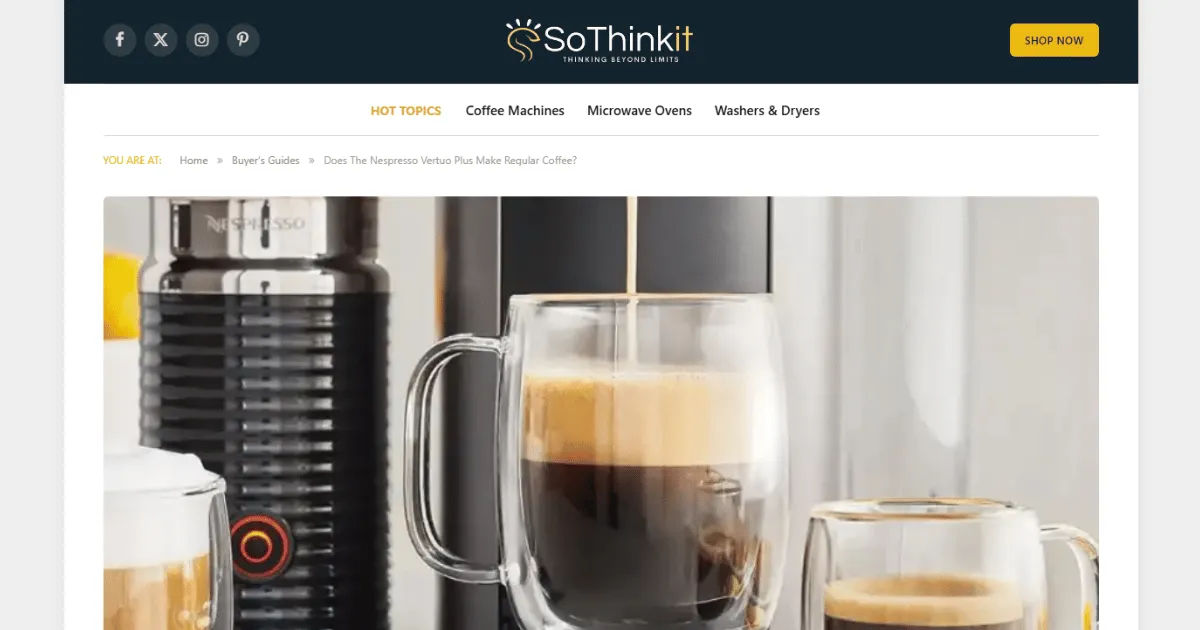
The Vertuo Plus is designed to brew each capsule according to the barcode printed around its rim, but that barcode cannot turn a mild breakfast coffee into Nespresso Vertuo Plus coffee maker strong coffee. If you want a stronger cup, the process starts before you even press the brew button.
Nespresso offers a wide range of Vertuo capsules, and they are made for different coffee experiences. Some are designed to be smooth and easy to drink over a large mug, while others are created to deliver a concentrated, rich espresso with deep roasted flavors. Choosing the right style of capsule makes far more difference than trying to force the machine to brew differently.
Another point worth understanding is that "strong" means different things to different people. Some people want a bold roasted flavor with dark chocolate notes. Others want a thick, concentrated espresso that stands up well to milk.
Some assume they need more caffeine when what they actually want is a richer taste or Nespresso Vertuo Plus coffee maker hot water for other uses. Once you separate these ideas, choosing the right capsule becomes much easier.
Espresso Capsules For Maximum Concentration
If your goal is the strongest tasting coffee possible, Espresso capsules are usually the best place to start. These capsules brew a small serving with very little dilution, so the coffee naturally tastes fuller and more intense.
A smaller serving concentrates the dissolved coffee solids into less water. That gives you a heavier body, stronger aroma, and longer-lasting finish compared to a full mug coffee. Even if the amount of ground coffee inside the capsule is different, the smaller brew size creates a much more powerful drinking experience.
I often recommend Espresso capsules to people who complain that their coffee tastes watery. In many cases, they have been brewing large Mug capsules and expecting an espresso-style flavor. The machine is simply producing the coffee exactly as that capsule was designed to taste.
Double Espresso Capsules Offer A Great Balance
For many households, Double Espresso capsules are the sweet spot between intensity and drinkability. They provide more coffee than a standard Espresso while still maintaining a rich, concentrated profile.
This is especially useful if a single Espresso feels too small but a Mug coffee feels too diluted. Double Espresso capsules often deliver enough volume for a satisfying morning coffee without sacrificing too much body or flavor.
They also work exceptionally well as the base for milk drinks because the coffee remains noticeable even after adding steamed or frothed milk.
Dark Roast Capsules Deliver A Bolder Flavor
Roast level has a huge influence on perceived strength. Dark roast capsules develop deeper caramelized sugars and roasted compounds during roasting, producing flavors that many people associate with a "strong" cup of coffee.
Expect tasting notes such as dark chocolate, roasted nuts, cocoa, toasted cereal, and sometimes a slight smoky character. These flavors create the impression of a more powerful coffee even though the caffeine content may not be significantly different from a lighter roast.
This is why intensity ratings can sometimes be misleading. A capsule with a high intensity score generally has a bolder flavor profile, but it is not automatically stronger in terms of caffeine.
Capsules For Black Coffee
If you mainly drink black coffee, choosing the right capsule becomes even more important because there is no milk or sugar to soften the flavors.
Many coffee lovers prefer darker Espresso, Double Espresso, or certain Gran Lungo capsules because they produce a fuller body with more pronounced roasted notes. These coffees tend to maintain their character as they cool and provide a richer mouthfeel throughout the cup.
Larger Mug coffees can still be enjoyable, but they are usually designed to offer balance and smoothness rather than maximum intensity. If your expectations are closer to what you would get from a coffee shop espresso, a Mug capsule will often seem lighter than you expect.
Capsules For Milk Drinks
Making lattes and cappuccinos requires a slightly different approach. The coffee has to compete with milk, which naturally softens bitterness and reduces perceived intensity.
A capsule that tastes perfectly balanced as a black coffee may seem surprisingly weak once several ounces of milk are added. That is why I almost always recommend using a stronger Espresso or Double Espresso capsule for milk-based drinks.
The richer coffee base keeps its flavor after mixing with milk, giving the finished drink better balance instead of tasting like warm milk with only a hint of coffee.
Strong Flavor Does Not Always Mean More Caffeine
One of the most common misunderstandings is assuming that the boldest tasting capsule must contain the most caffeine.
In reality, caffeine depends on several factors, including the type of coffee beans, the blend, and the amount of coffee used in the capsule. A smooth medium roast can sometimes contain as much or even more caffeine than a dark roast with a higher intensity rating.
Dark roasting changes flavor far more than it changes caffeine. The coffee develops deeper roasted characteristics that people naturally describe as stronger, but those flavor changes should not be confused with a significant increase in caffeine content.
Understanding this difference helps set realistic expectations. If you are looking for a coffee that wakes you up, caffeine matters. If you want a cup that tastes richer and bolder, the roast profile, capsule style, and brew size matter much more.
How To Make A Strong Latte With Nespresso Vertuo Plus
Many people are disappointed after making their first latte with the Vertuo Plus because the drink tastes much weaker than the one they buy from a café. In most cases, the machine is not at fault. The problem is that the coffee-to-milk ratio is out of balance.
Milk naturally reduces bitterness, softens roasted flavors, and makes coffee taste smoother. While that is exactly what creates a creamy latte, it also means the coffee base needs to be strong enough to remain noticeable after the milk is added.
One mistake I see repeatedly is using a Mug-sized capsule as the base for a latte. Since these capsules are designed to produce a larger, smoother coffee, adding milk dilutes the flavor even further. The result often tastes flat rather than rich.
A much better approach is to start with an Espresso or, even better, a Double Espresso capsule. These smaller servings provide a concentrated foundation that keeps its character after milk is added.
The amount of milk matters just as much as the coffee. It is tempting to fill a large mug with milk because it creates a café-style appearance, but too much milk overwhelms the coffee. Even an excellent Espresso can disappear if the cup contains far more milk than coffee.
In my experience, reducing the milk slightly often improves the drink more than changing capsules. A balanced ratio allows the sweetness of the milk to complement the coffee instead of covering it completely.
Milk texture also plays an important role. Properly frothed milk feels lighter and blends more evenly with the espresso, helping the coffee flavors come through more clearly. Cold milk poured directly into the cup usually creates a flatter, less satisfying drink.
Temperature is another detail many people overlook. Overheated milk loses some of its natural sweetness and can develop a cooked taste that masks the coffee's complexity. Gently heated milk produces a smoother, sweeter latte without needing extra sugar.
If you enjoy flavored syrups, add them carefully. Vanilla, caramel, and hazelnut syrups can easily overpower the coffee if used in large amounts. A small amount enhances the drink, while too much makes every latte taste the same regardless of which capsule you use.
Finally, remember that a latte will never taste as intense as a straight Espresso. That is simply the nature of a milk-based drink. The goal is not to make the latte harsh or bitter but to create enough coffee concentration that every sip still tastes like coffee first and milk second.
