
Yes, a Turnkey Rental Property Toledo can absolutely have a long-term tenant. In fact, an established tenant can be one of the more attractive features of a turnkey investment, provided the tenancy is genuinely strong and the numbers still work.
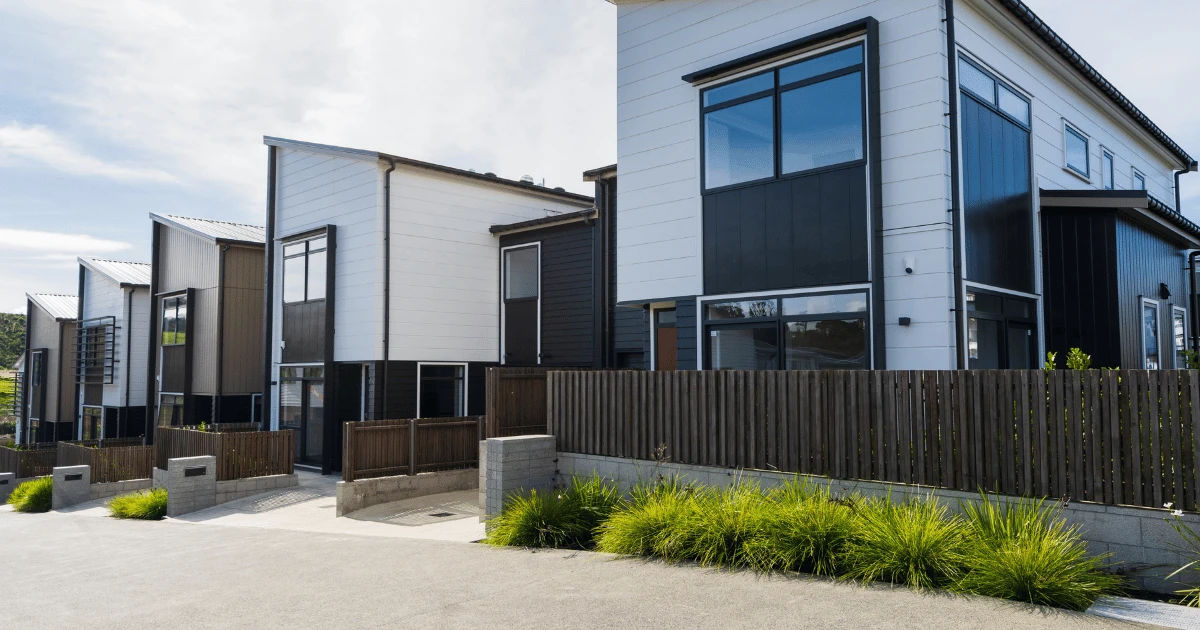
The word “turnkey” describes the property's condition and investment readiness. It does not mean the home has to be vacant, newly leased, or occupied by a short-term renter. A turnkey rental property Toledo may be sold vacant and ready for a tenant, recently leased to someone new, or already occupied by a tenant who has lived there for several years.
That last situation can be particularly interesting for an investor. Instead of buying a property and immediately worrying about advertising, showings, tenant screening, leasing costs, and vacancy, you may inherit an established rental relationship.
But there is an important distinction to make before getting excited: a property having a long-term tenant does not automatically make turnkey rentals Toledo Ohio a better investment. You need to know whether that tenant pays reliably, whether the lease is reasonable, whether the rent is appropriate, how the tenant treats the property, and whether the property's overall financial performance makes sense.
The real question is not simply, “Does this Toledo rental have a long-term tenant?” It is, “Does this particular tenant make the investment stronger?”
Can Turnkey Rental Property Toledo Have Long-Term Tenants?
A tenant-occupied turnkey property is completely possible. An investor can purchase a Toledo rental property that already has someone living in it under a fixed-term lease, a month-to-month arrangement, or a lease that has been renewed several times.
For example, imagine a seller owns a renovated rental home and has had the same tenant living there for four years. The tenant has paid rent consistently, kept the home in reasonable condition, and recently renewed the lease. The property is being sold as a turnkey investment. There is nothing contradictory about that arrangement. The buyer is simply acquiring a rental property with an existing tenancy.
The same applies when the tenant has occupied the home for several years through successive annual leases. In some cases, the current tenant may have been there longer than the current owner. That can be useful information because it provides a history of actual occupancy rather than a projection about what might happen after the purchase.
However, investors need to look beyond the phrase “long-term tenant.” A listing might describe a renter as excellent and long-term, but that does not tell you the current rent, payment history, maintenance history, lease expiration date, renewal provisions, or whether the rent is significantly below what the property could reasonably command.
A month-to-month tenant who has stayed for three years is also different from a tenant with a recently signed two-year lease. Both may be described as long-term tenants, but their contractual situations are different.
That is why buying an existing tenant rental property requires the same kind of due diligence you would use for any other investment. The tenant is part of the investment, but the tenant is not the investment by themselves.
What Does a Long-Term Tenant Mean for a Toledo Rental Property?
When an investor hears that a tenant has lived in a Toledo property for five or seven years, the first reaction is often positive. Long occupancy can indicate stability, but it should be treated as a starting point for investigation rather than proof of tenant quality.
A genuinely strong long-term tenant usually has a history of paying rent on time, communicating when problems arise, maintaining the home reasonably well, and following the terms of the rental agreement. Consistent renewals can also demonstrate that the tenant likes the property and wants to remain there.
Maintenance history can be especially revealing. A tenant who has lived in a property for years will naturally generate some maintenance requests. That is normal. The useful question is whether those requests are ordinary wear and tear or whether there is a pattern of preventable damage, repeated problems, or unusually high maintenance demands.
The payment record matters just as much. A tenant who has occupied a home for six years but frequently pays late or carries balances is not necessarily a stronger tenant than someone who has been there for eighteen months and has an excellent payment history.
I would also look at communication and renewal history. Has the tenant renewed voluntarily? Have there been disputes? Has the tenant requested reasonable repairs? Has the owner had difficulty reaching them? These details give you a much better picture of tenancy stability than the number of years alone.
In other words, “long-term” describes duration. It does not automatically describe quality.
Why Long-Term Tenants Can Be Good for a Turnkey Rental Property
A strong long-term tenant can have real financial value because tenant turnover costs money even when everything goes reasonably well.
When a tenant leaves, the property may need cleaning, painting, minor repairs, landscaping, advertising, showings, screening, lease preparation, and management attention. There may also be a period when the property produces no rental income. The costs are not always dramatic individually, but they add up over repeated turnovers.
Now compare that with a tenant who renews for another year. The investor may avoid an entire leasing cycle. There is no need to advertise the property to dozens of prospective renters, schedule repeated showings, screen new applicants, prepare the property for a new occupant, or absorb a vacancy simply because the previous lease ended.
That stability can be especially useful for an investor involved in out of state real estate investing. Someone living hundreds or thousands of miles from Toledo generally has less interest in dealing with frequent tenant turnover than an investor who lives around the corner from the property.
A long-term tenant can also make rental income more predictable. Predictability is valuable when you are underwriting mortgage payments, taxes, insurance, property management, maintenance reserves, and other operating expenses.
There is another practical advantage that is sometimes overlooked. A tenant who has lived in the same house for years may know the property's quirks. They can often identify a leaking fixture, furnace problem, plumbing issue, or other developing problem before it becomes a major repair.
That does not mean long-term tenants eliminate maintenance. They do not. It simply means a stable tenant relationship can create continuity between the owner, property manager, and occupant.
The key word is “strong.” A long-term tenant who pays consistently and cares for the property can be an asset. A long-term tenant with chronic payment problems or excessive maintenance issues can be an entirely different story.
Are Long-Term Tenants Always Better for Investors?
No. This is one of the assumptions I would be careful about.
A long-term tenant can sometimes remain in a property under an old lease with rent that is substantially below current market levels. The tenant may be perfectly reliable, but the property may not be producing as much rental income as it reasonably could.
That does not automatically mean you should replace the tenant. Turnover has a cost, and a reliable tenant paying slightly below market may still produce better real-world results than chasing a higher rent that takes several weeks to achieve and requires substantial turnover expenses.
Consider a hypothetical example. Suppose a tenant is paying $1,000 per month and comparable properties could potentially rent for $1,100. The theoretical annual difference is $1,200. But if getting the higher rent requires a month of vacancy plus $1,500 in turnover and leasing costs, the investor could lose more in the short term than the rent increase produces.
This is why rental optimization and tenant stability should be evaluated together.
There are also more serious warning signs. A tenant may have been in the property for years while accumulating late payments, creating repeated property damage, or making frequent complaints about conditions that the owner has failed to address. Long occupancy does not erase those problems.
The right question is not whether the tenant has stayed a long time. It is whether the tenancy contributes positively to the property's economics, condition, and management.
How Long-Term Tenants Affect Rental Income in Toledo
One of the most important parts of evaluating a long term rental property Toledo investment is comparing actual contractual rent with realistic market rent.
The current rent is the amount the property is producing today. Market rent is an estimate of what a comparable property could reasonably command under current conditions. Those numbers can be different, sometimes significantly.
An investor should calculate what happens under both scenarios. Suppose a tenant currently pays $1,050 per month and the investor believes the property could eventually rent for $1,150. The $100 monthly difference looks attractive, but it should not be treated as guaranteed additional cash flow.
The investor has to consider the lease, renewal timing, legal requirements, potential vacancy, turnover expenses, management fees, repairs, and the possibility that the actual market rent is lower than the investor expects.
This is where rental property cash flow becomes more useful than headline rent. A property producing $1,150 in gross rent is not automatically better than one producing $1,050. If the higher rent comes with greater vacancy, expensive turnover, or higher maintenance, the difference may be smaller than expected.
For example, assume the $1,050 tenant renews and creates almost no vacancy or turnover expense. Compare that with a hypothetical $1,150 rent that requires one month of vacancy and $1,500 of turnover costs. The higher monthly rent may eventually win, but it takes time to recover the initial loss.
This is why I would underwrite the property using the rent that is actually supported by the lease and current documentation. Treat future rent increases as a potential upside rather than guaranteed income.
A good Toledo rental property investment should still make sense using conservative assumptions. If the deal only works because you assume an immediate rent increase, zero vacancy, minimal repairs, and perfect management, the problem is probably not the tenant.
What Should You Check Before Buying a Tenant-Occupied Turnkey Property?
This is where the difference between a genuinely good turnkey investment and a nicely marketed property becomes obvious.
Start with the existing lease. You need to know the current rent, lease start date, expiration date, renewal provisions, responsibilities for utilities and maintenance, and any special terms. Do not rely on a verbal explanation from the seller when the actual lease is available.
Then review the rent ledger or other payment records. A seller saying “the tenant always pays” is useful, but documented payment history is much better. You want to understand whether rent has been paid consistently, whether there have been repeated late payments, and whether any balance is currently outstanding.
The security deposit also needs attention. You should know how much was collected, how it was documented, and how it will be handled as ownership changes. Ohio law contains specific rules governing residential security deposits, including requirements concerning certain deposits and the handling of deductions after a tenancy ends.
Next, look at maintenance records. This can reveal things a property listing will never tell you. A tenant who has lived there for five years and generated a normal number of service calls may be perfectly reasonable. A tenant associated with repeated plumbing failures, damaged doors, appliance abuse, or unresolved complaints deserves much closer attention.
You should also investigate the property's physical condition independently. “Turnkey” is not a substitute for an inspection. A property can look clean and occupied while still having aging mechanical systems, roof issues, drainage problems, electrical concerns, or other deferred maintenance.
Market rent should be investigated separately as well. You want to understand whether the existing rent is reasonable for the property's location and condition, not simply accept the seller's projection.
Finally, verify claims. If the listing says the tenant has been there for seven years, ask for documentation. If it says the tenant has never missed a payment, review the records. If it says maintenance is minimal, look at the maintenance history.
Good underwriting is often about verifying ordinary statements that sound harmless.
What Happens to the Existing Tenant When You Buy a Turnkey Rental?
Buying the property does not simply erase an existing tenancy.
If a tenant is occupying the property under a valid rental agreement, the buyer needs to understand the existing lease and the obligations associated with it. The lease expiration date, renewal provisions, rent amount, security deposit, and other terms can materially affect the buyer's plans.
This matters because some investors purchase a tenant-occupied property assuming they can immediately change the rent or change the tenancy after closing. That assumption can create problems.
Ohio law governs many landlord-tenant rights and obligations, and the terms of the existing rental agreement also matter. Ohio's landlord-tenant statute includes protections against retaliatory actions and establishes requirements concerning residential rental relationships.
The exact situation can depend on the lease, tenancy type, timing, and circumstances. An investor considering a purchase should have the relevant documents reviewed by an appropriate Ohio real estate professional or attorney when the situation is unclear.
The practical takeaway is simple: treat the existing tenant as part of the transaction. Do not assume that closing day gives you a blank slate.
Should You Keep the Existing Long-Term Tenant?
In many cases, keeping a strong existing tenant can be the sensible choice.
If the tenant consistently pays rent, cares for the property, communicates appropriately, has a solid rental history, and occupies the property under reasonable lease terms, there may be little reason to disrupt the arrangement simply because you became the new owner.
This can be particularly compelling when the existing rent is reasonably close to market and the property is already performing well. You get continuity without having to manufacture a tenant relationship from scratch.
The decision becomes more complicated when the rent is significantly below market. Even then, I would not automatically recommend removing the tenant. First calculate the economic difference between keeping the tenant and pursuing a higher rent after turnover.
Suppose the tenant pays $1,000 and a realistic market rent is $1,200. That $200 difference is meaningful, but you still need to account for vacancy, repairs, leasing costs, management fees, and the risk that the projected $1,200 is optimistic.
Payment problems are a different concern. If the tenant regularly pays late, has an outstanding balance, or has a history of lease violations, the fact that they have lived there for years should not make you ignore those issues.
The goal is not to maximize rent at any cost. The goal is to create a sustainable investment. Sometimes that means keeping a slightly under-market tenant who is exceptionally reliable. Sometimes it means planning for a different tenancy at the appropriate time. The numbers and documentation should guide that decision.
How Property Management Handles Long-Term Tenants in a Turnkey Rental
A long-term tenant does not make property management unnecessary.
Someone still needs to collect rent, respond to maintenance requests, coordinate vendors, document repairs, handle lease renewals, conduct appropriate inspections, and communicate with the tenant. A stable tenant may reduce some of the workload, but the property still needs to be managed.
For an out-of-state investor, this distinction matters. You might not have to find a new renter this month, but if the furnace stops working in January, someone in Toledo still needs to deal with it.
Good Toledo property management can provide continuity between the owner and tenant. That can include rent collection, maintenance coordination, renewal discussions, documentation, and communication when issues arise.
The important thing is to understand what the management agreement actually covers. Management fees, maintenance authorization limits, inspection policies, leasing charges, renewal fees, and vendor arrangements can all affect the property's economics.
I would also want to know who managed the tenant before the purchase. If the same manager is staying on, review the management records. If management is changing, make sure the tenant's lease, payment history, deposit information, maintenance records, and communication history are transferred properly.
A tenant should not have to become the messenger between two owners or two management companies.
How Long-Term Tenants Affect Turnkey Rental Property Returns
Long-term tenancy affects returns mainly through vacancy, turnover costs, operating stability, and rental income.
Imagine a hypothetical Toledo investment generating $1,100 per month. If a strong tenant renews annually, the investor may avoid a substantial portion of the costs associated with vacancy and turnover. Over several years, those avoided costs can meaningfully contribute to the property's performance.
But the calculation does not stop at rent.
The investor still has mortgage costs, property taxes, insurance, management expenses, routine maintenance, capital expenditures, utilities where applicable, and potential major repairs. The purchase price also matters. A great tenant cannot rescue a property that was purchased at a price that makes the investment fundamentally unattractive.
Suppose one property has a reliable tenant paying $1,050 and another similar property could potentially rent for $1,200. It would be a mistake to automatically choose the second property simply because the advertised rent is higher. You need to compare vacancy assumptions, maintenance, property condition, management costs, taxes, insurance, and purchase price.
Likewise, an occupied property should not automatically receive a premium valuation just because it has a tenant. The quality of the tenancy matters, but the underlying real estate still determines a large part of the investment risk.
The best approach is to model the property using conservative assumptions. Use documented current rent, realistic vacancy, reasonable maintenance reserves, actual management costs, and a purchase price that leaves room for unexpected expenses.
A long-term tenant should improve the investment's stability, not be used to hide weak underwriting.
What Are the Risks of Buying a Turnkey Rental With a Long-Term Tenant?
One risk is below-market rent. The seller may present the tenant as an excellent feature while the lease produces less income than the property could reasonably generate.
Another risk is unfavorable lease language. Renewal provisions, maintenance responsibilities, concessions, deposits, utility arrangements, or other terms may affect your future income and expenses.
Deferred maintenance is another concern. A property can remain occupied for years without receiving the level of preventive maintenance an investor would ideally want. Long-term occupancy can sometimes conceal aging systems because there has been no turnover period when the owner would normally inspect and refresh the property.
There can also be tenant disputes that are not obvious from a sales listing. Maintenance complaints, disagreements about repairs, payment arrangements, or unresolved issues should be investigated before closing.
Documentation problems deserve attention too. If the seller cannot produce a clear lease, rent ledger, security deposit records, or maintenance history, the uncertainty itself has value. You should not simply assume everything is fine because the tenant has lived there for a long time.
Finally, there is always future vacancy risk. Even an excellent tenant can move because of a job change, family circumstances, financial changes, or other reasons completely outside the landlord's control.
The phrase “long-term tenant” should therefore make you curious, not careless.
Toledo-Specific Considerations for Long-Term Rental Investors
Toledo investors need to look at the specific property and neighborhood rather than treating the entire Toledo rental market as one uniform market. Rental demand, property condition, tenant expectations, maintenance requirements, and achievable rent can vary considerably from one part of the city to another.
Older housing also deserves particular attention. Toledo's Lead Safe program requires residential rental properties with one to four units built before 1978 to meet lead-safe standards and obtain a Lead-Safe Certificate. The city states that owners are responsible for maintaining covered rentals in a lead-safe condition.
The city also says property owners subject to Lead Safe Toledo requirements need to register rental properties with the Lucas County Auditor's rental registry, arrange the required clearance process, address identified hazards, and maintain compliance.
That matters when evaluating an older turnkey investment. If the property is occupied and being presented as ready to operate, you still want to verify its documentation and compliance rather than assuming “turnkey” covers every local requirement.
Toledo also has requirements concerning vacant residential properties. The city's current guidance says owners generally must register qualifying residential properties that have been vacant for more than 30 days, even if the owner intends to rent them.
For a tenant-occupied property, the immediate concern may not be vacancy registration, but these rules illustrate why local compliance belongs in your underwriting.
Investors should verify current Toledo requirements directly with the city before closing because local programs and enforcement rules can change.
Questions to Ask Before Buying a Turnkey Rental With a Long-Term Tenant
Start by asking how long the tenant has lived in the property and then ask for documentation supporting that answer. Ask what the current monthly rent is, when the lease expires, whether it has been renewed previously, and whether the tenant is currently month-to-month or under a fixed-term agreement.
Ask for the rent ledger rather than relying on a verbal description of payment history. Find out whether there have been late payments, unpaid balances, payment plans, or other issues.
Maintenance questions are equally important. Ask how many maintenance requests have been submitted during the tenant's occupancy, what major repairs have been completed, and whether there are unresolved complaints. A maintenance history can tell you much more about the real condition of a property than fresh paint and staged photographs.
Ask whether the tenant has received rent increases previously and whether any concessions or special agreements exist. Ask how much security deposit is being held and how it is documented.
Finally, ask the property manager or seller what they would expect to happen at the next renewal. If the answer is vague, investigate further. You are not just buying a house. You are buying an income-producing asset with an existing contractual relationship attached to it.
Is a Turnkey Rental Property With a Long-Term Tenant a Good Investment?
It can be an excellent setup, but the tenant alone does not determine whether the investment is good.
A strong long-term tenant can provide immediate rental income, reduce vacancy risk, minimize turnover expenses, and give an investor a documented history of how the property actually performs. For an investor building a buy and hold rental property portfolio, that stability can be valuable.
But you still need to evaluate the property itself. Is the purchase price reasonable? Is the current rent realistic? Are taxes and insurance manageable? Is the property in good physical condition? Are the mechanical systems approaching the end of their useful lives? Is the management arrangement sensible? Does the cash flow work after realistic operating expenses?
The lease matters just as much. A five-year tenant under reasonable terms can be a strong positive. A five-year tenant paying significantly below market under an unfavorable agreement may require a much more careful analysis.
I would also avoid treating “turnkey” as a substitute for due diligence. A turnkey investment property should be easier to operate, not impossible to inspect.
Ultimately, a tenant-occupied Toledo property can be attractive because it gives you something that many new rentals do not have: an actual operating history. Use that history. Look at the rent ledger, lease, maintenance records, property condition, and expenses. Then decide whether the tenant strengthens the investment or simply makes the listing sound better.
Conclusion
Yes, a Turnkey Rental Property Toledo can absolutely have long-term tenants, and an established tenant can be a valuable part of a buy-and-hold investment. A tenant who has paid consistently, cared for the property, renewed the lease, and created few management problems can reduce vacancy and turnover expenses while providing an investor with a real operating history. That can be especially useful for investors who are managing a Toledo rental from outside the area.
But the bigger lesson is that “long-term tenant” should never be treated as a complete investment thesis. The number of years someone has lived in the property tells you only part of the story. You need to examine the payment history, current rent, lease terms, renewal history, security deposit, maintenance records, property condition, and management relationship. You also need to compare the current rental income with realistic market rent and calculate whether the property's cash flow remains attractive after taxes, insurance, management, maintenance, capital expenditures, vacancy assumptions, and the purchase price.
The best turnkey investment is therefore not necessarily the property with the longest-standing tenant or the highest advertised rent. It is the property where the tenant, lease, condition, operating expenses, purchase price, management arrangement, and expected long-term returns all make sense together. If the tenant is strong and the numbers work, an existing tenancy can make a Toledo investment considerably easier to operate. If the tenant is being used to distract from below-market rent, deferred maintenance, weak documentation, or poor cash flow, the word “turnkey” will not fix the underlying problem. Good investors look past the label and evaluate how the entire rental actually works.
