Bottom Banner

How Do Artistic Just Tattoos Show Creativity?

 Tattoos have always been more than marks placed on the skin. While some people see tattoos as simple decoration, anyone who has spent time around tattoo artists, consultations, and real design conversations understands that a tattoo can represent imagination, memory, personality, and artistic thinking.
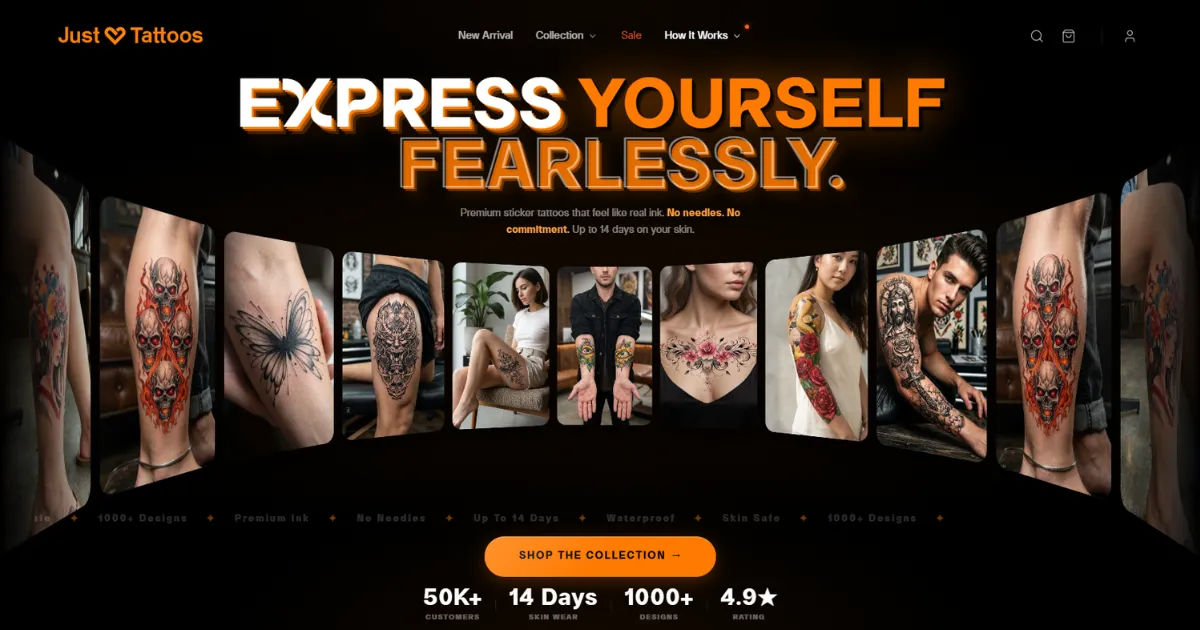
Artistic Just Tattoos show creativity because they combine visual art with personal expression. A flower tattoo is one example of how a design can be adapted to reflect individuality and artistic style. A tattoo is not created on a blank piece of paper. It is designed on a living body with natural curves, movement, texture, and limitations. Every decision matters, from the shape of the artwork to where it sits on the body and how it will look years later.

In my experience, many people walk into tattoo consultations with a simple idea. They may bring a picture, a symbol, a quote, or even just a feeling they want to express. What they often do not realize is how much creative development happens between that first idea and the finished tattoo.

A small idea like “I want a flower tattoo” can become hundreds of different artistic possibilities. The artist may consider the type of flower, the meaning behind it, the style, the placement, the line weight, the shading, and how the design follows the body. The final tattoo is not just a copied image. It becomes a personal artwork.

What separates creative tattoo designs from ordinary tattoos is the thought behind them. A creative tattoo does not always need complicated details or bright colours. Sometimes creativity comes from simplicity, clever composition, emotional symbolism, or a unique interpretation of a familiar idea.

Artistic Just Tattoos represent the meeting point between imagination and technical skill. A wrist tattoo is one way people can carry artwork that reflects who they are, what they value, what they remember, or simply what they appreciate visually.

What Makes Artistic Just Tattoos A Form Of Creative Expression?

The easiest way to understand Artistic Just Tattoos is to stop thinking of them as only body decoration. They are a form of visual communication. Like paintings, illustrations, sculptures, or photography, tattoos use artistic choices to create a reaction and tell a story.

A tattoo combines several creative elements at the same time. The artist must think about design, balance, symbolism, technique, and how the artwork interacts with the human body.

The body itself becomes part of the artwork.

A canvas in a gallery remains still, but a tattoo moves with a person. A design placed on the shoulder behaves differently from one placed on the forearm, chest, or leg. The artist has to understand how muscles, joints, and body curves influence the appearance of the tattoo.

This is one reason custom tattoo artwork requires more creativity than simply choosing an image online and copying it.

A copied design may look attractive on a screen but may not fit naturally on someone's body. A skilled tattoo artist thinks beyond the image itself. They consider how the design will flow, how it will age, and whether it matches the person wearing it.

What most people misunderstand is that creativity in tattoos is not always about making something extremely complicated. Adding more details does not automatically make a tattoo more artistic. Sometimes a simple design with excellent placement, strong composition, and emotional meaning creates a much stronger result.

For example, a small bird tattoo could be a common choice. But an artist can transform it into a unique piece by changing the movement of the bird, adjusting the style, adding personal symbolism, or designing it around the person's story.

That transformation is where tattoo creativity appears.

Artistic tattoos also involve personal interpretation. Two people can choose the same subject but end up with completely different tattoos. One person may choose a realistic wolf because it represents independence. Another may choose an abstract wolf made from geometric shapes because they connect with the idea of strength and balance.

The subject may be similar, but the artistic expression is different.

This is why tattoos are considered an art form. They are not only about what is drawn. They are about how the idea is interpreted.

How Do Artistic Just Tattoos Reflect Personal Creativity?

Most creative tattoos begin with something personal, even when the final design looks purely artistic.

People often carry memories, emotions, experiences, beliefs, and interests that they want to express visually. A tattoo becomes a way to turn something invisible, such as a feeling or personal journey, into something visible.

In real tattoo consultations, people rarely start with a perfect design idea. They usually start with a concept.

Someone may say:

“I want something that represents change.”

“I want a tattoo connected to my family.”

“I want something that reminds me of travelling.”

“I like this animal, but I want it to feel different.”

The creative process begins when the artist helps translate those ideas into visual language.

A feeling cannot be directly tattooed onto skin. An artist has to find symbols, shapes, textures, and styles that communicate that feeling.

For example, someone who wants a tattoo representing personal growth does not necessarily need a basic tree design. The idea could become a tree with unusual roots, abstract branches, seasonal changes, or a design combined with another meaningful element.

The creativity comes from interpretation.

This is why personalized tattoo designs often feel stronger than generic designs. A personalized tattoo contains choices that connect specifically to the person wearing it.

Even small decisions can create individuality. The choice of colour, line style, composition, size, and placement can completely change the personality of a tattoo.

A rose tattoo can appear romantic, dark, traditional, elegant, mysterious, or abstract depending on how it is designed.

A mountain tattoo can represent adventure, survival, peace, challenge, or connection with nature depending on the artistic approach.

The image itself is only the starting point.

The creativity develops through the decisions made around that image.

Emotions also influence artistic choices. Soft flowing lines may communicate calmness, while sharp geometric patterns may create a feeling of structure or intensity. Dark shading can create depth and seriousness, while bright colours can bring energy and movement.

People often underestimate how much personality can be expressed through visual details.

A tattoo does not need words to communicate something. The combination of imagery and artistic decisions can say a lot about the person wearing it.

However, creativity does not mean every tattoo must have a dramatic personal story. Some people simply appreciate beautiful artwork and want to wear something visually interesting. Choosing a tattoo because you admire the design itself is also a valid form of creative expression.

Art can exist because it communicates a personal experience, but it can also exist because it creates beauty.

How Do Tattoo Artists Add Creativity To Artistic Just Tattoos?

A professional tattoo artist does much more than transfer an image onto skin. The real creative work often begins before the tattoo machine is ever turned on.

The tattoo design process usually starts with conversation.

The artist needs to understand what the client actually wants. This involves asking questions, studying references, understanding preferences, and sometimes helping the client discover what they are trying to express.

A client may bring a collection of unrelated images. One picture might show a style they like, another might show a symbol they connect with, and another might simply represent a mood they want.

The artist's job is to find the connection between these pieces.

This requires creative problem-solving.

A good artist does not simply combine random elements together. They think about whether those elements work visually and emotionally.

For example, a client might request a realistic animal, a quote, and geometric patterns in one tattoo. The artist must decide how these elements interact. Should the quote be hidden? Should the geometric elements frame the animal? Should the style remain realistic or move toward a more abstract direction?

These decisions shape the final artwork.

Sketching and redesigning are important parts of the process. The first idea is rarely the final idea. Artists often adjust proportions, simplify details, change composition, or completely rethink parts of the design.

This is normal.

Many people believe a tattoo artist simply copies an image, but experienced artists spend significant time solving design problems. They consider how the tattoo will look from different angles, how it fits the body, and how it will age.

A design that looks perfect on paper may not work well as a tattoo.

The artist must consider:

Body shape.

Placement.

Movement.

Size.

Skin characteristics.

Long-term appearance.

For example, a highly detailed design may look impressive when large but lose clarity if made too small. A very thin-lined design may look elegant initially but require careful planning to maintain its appearance over time.

The artist's creativity includes knowing what changes will improve the tattoo.

Placement is another major area where artistic thinking appears.

A tattoo designed for the forearm should follow the natural length and movement of the arm. A back piece requires different composition because it offers a larger surface. A tattoo near a joint needs consideration because the body constantly moves.

The best artists do not fight the body. They work with it.

Different techniques also create different creative results.

Fine line techniques can create delicate and detailed artwork. Realistic techniques focus on depth, texture, and lifelike appearance. Traditional approaches use bold outlines and strong colours. Abstract approaches allow artists to explore shapes, movement, and emotion.

The technique becomes part of the artistic message.

In my experience, some of the most impressive tattoos are not necessarily the biggest or most complicated ones. They are the ones where every decision feels intentional. The design fits the person, the placement makes sense, and the artwork feels like it belongs there.

That is the difference between simply having a tattoo and having a piece of body art.

What Elements Make Artistic Just Tattoos Creative?

Creativity in Artistic Just Tattoos comes from several design elements working together. A tattoo becomes artistic when the choices behind it feel intentional rather than random.

A creative tattoo is not simply an image placed on the skin. It is a combination of concept, technique, composition, and personal interpretation.

Original Concepts

One of the strongest signs of tattoo creativity is originality.

This does not mean every tattoo must be something nobody has ever seen before. In reality, almost every tattoo subject has been used many times. Animals, flowers, portraits, symbols, and patterns are popular for a reason.

The creative difference comes from interpretation.

A skilled tattoo artist can take a familiar idea and give it a completely different personality. A snake tattoo, for example, has existed in tattoo culture for generations. But one artist may create a realistic snake with detailed scales, another may design a flowing abstract version, and another may combine it with unusual elements that connect to the client's personal story.

The subject may be familiar, but the artwork becomes unique.

What most people misunderstand is that creativity is not about constantly chasing something strange or unusual. Sometimes the most creative designs are based on simple ideas that are developed with careful artistic decisions.

A common symbol can become meaningful when it is redesigned around the person wearing it.

Symbolism And Storytelling

Many artistic tattoos communicate stories without using words.

Symbols have always played an important role in body art. A flower, animal, object, or pattern can represent memories, values, emotions, or experiences.

However, the creativity comes from how those symbols are combined.

An artist may use colour, placement, movement, and surrounding elements to create a deeper visual message.

For example, a butterfly can represent change, but the design possibilities are endless. It could be delicate and realistic, dark and dramatic, geometric and structured, or mixed with other imagery to create a completely different feeling.

The symbol stays recognizable, but the artistic interpretation changes.

This is why body art expression is so personal. The same image can mean something completely different depending on the person, the design approach, and the story behind it.

Composition And Visual Balance

Composition is one of the areas where professional tattoo artists separate themselves from simple image copying.

A tattoo needs balance.

The artist must decide where the main focus should be, how large each element should appear, how much empty space is needed, and how the design flows across the body.

A design with too many elements can become confusing. A design with too little structure can feel unfinished.

Good composition allows every part of the tattoo to work together.

For example, a large back tattoo may need a central focus with supporting details that guide the eye naturally. A smaller forearm tattoo may need a simpler structure because the available space is limited.

The body changes the artwork.

A design that looks balanced on paper may need adjustments when placed on a person's shoulder, leg, or arm. This is why experienced tattoo artists think about the body as part of the design rather than simply a surface.

Spacing is also important.

Sometimes what an artist removes from a design creates more impact than what they add. Clean space allows important details to stand out.

Creative tattoo designs are often successful because they understand balance, not because they contain endless details.

How Do Different Tattoo Styles Demonstrate Creativity?

Different tattoo styles show creativity in different ways. Artistic expression is not limited to one technique or appearance. Each style gives artists different tools for communicating ideas.

Minimalist Artistic Just Tattoos

Minimalist tattoos prove that creativity does not require complexity.

Many people assume a small tattoo with simple lines cannot be highly artistic. In reality, minimal designs often require strong decision-making because every line matters.

When there are fewer elements, mistakes become more noticeable.

A minimalist tattoo depends on precision, spacing, and confidence. The artist has to communicate an idea using only essential details.

A small symbol, delicate line drawing, or simple shape can carry strong visual impact when designed correctly.

The creativity comes from knowing what to include and what to remove.

Realistic Artistic Just Tattoos

Realistic tattoos demonstrate creativity through observation and technical skill.

Creating a realistic portrait, animal, or object requires understanding texture, lighting, shadows, and depth.

However, realism is not just about copying what something looks like.

The artist still makes creative decisions about mood, composition, contrast, and style.

Two realistic portraits of the same person can feel completely different depending on the artist's approach.

One may focus on emotion and softness, while another may create a dramatic, powerful appearance through contrast and shading.

Abstract Artistic Just Tattoos

Abstract tattoos show creativity by moving away from traditional representation.

Instead of creating an exact image, artists use shapes, patterns, movement, and visual concepts to create feelings or ideas.

Abstract designs allow more freedom because they are not restricted by making something look exactly like reality.

The artist may focus on energy, balance, emotion, or visual rhythm.

For people who want something less obvious, abstract tattoo artwork can create a very personal connection.

Nature-Inspired Artistic Just Tattoos

Nature has always been a major influence in tattoo culture.

Flowers, animals, landscapes, and natural elements provide endless creative possibilities.

The creativity appears through interpretation.

A nature tattoo can be realistic, symbolic, minimal, colourful, dark, or completely experimental.

A tree can represent family, growth, strength, or simply appreciation for nature. The design choices determine how that idea is communicated.

Geometric And Ornamental Artistic Tattoos

Geometric and ornamental tattoos demonstrate creativity through structure and precision.

These designs often rely on patterns, symmetry, repetition, and mathematical balance.

However, creating them is not only about drawing shapes.

The artist must understand how patterns interact with the body's natural form. A geometric design placed incorrectly can look disconnected, while a well-designed piece can appear almost like it was created specifically for that body.

The creativity comes from combining order with personal expression.

Why Do People Choose Artistic Just Tattoos Instead Of Basic Designs?

Many people choose Artistic Just Tattoos because they want something that feels connected to them rather than something selected from a collection of common images.

A basic tattoo may look attractive, but a creative tattoo often has another level of personal involvement.

The person feels connected to the design process.

Personal Connection

A custom tattoo allows people to include elements that reflect their experiences, interests, or personality.

This does not always mean the tattoo represents something serious. Sometimes the connection comes from a person's love for a certain style, subject, or artistic approach.

The tattoo feels more personal because it was chosen intentionally.

Individuality

People often want tattoos that do not look exactly like everyone else's.

This does not mean they need a completely original concept. Instead, they want their version to feel unique.

Small changes in style, composition, and design choices can completely change the final result.

A creative tattoo gives someone the opportunity to express individuality through artwork.

Appreciation For Artwork

Some people choose artistic tattoos because they genuinely appreciate tattooing as a creative discipline.

They view their body as a place where they can display artwork they enjoy.

Just like someone may collect paintings, photographs, or sculptures, some people appreciate having meaningful artwork created on their skin.

Long-Term Satisfaction

A tattoo is a long-term decision.

Trends change, but a well-designed artistic tattoo often remains enjoyable because it is based on thoughtful choices rather than temporary popularity.

A design created with personal connection and artistic quality is more likely to feel valuable years later.

How Does Collaboration Create More Creative Tattoo Designs?

The strongest tattoos usually come from collaboration between the client and the artist.

A client brings personal meaning, ideas, memories, and preferences.

The artist brings experience, technical knowledge, design skills, and an understanding of what works well as a tattoo.

Both sides contribute something important.

Many people make the mistake of thinking they need to arrive with a complete tattoo design. They believe they need to know exactly what the final artwork should look like.

That is rarely necessary.

A good artist can help develop an idea.

In many consultations, the best results happen when clients explain the feeling or concept behind their idea instead of only showing a picture and saying, “I want this.”

The artist can then create something more personal.

For example, instead of saying, “I want this exact flower,” a client might explain why they want a flower tattoo. Maybe it connects to a memory, a person, or a personal experience.

That information gives the artist more creative direction.

However, collaboration also requires flexibility.

Sometimes an artist may suggest changing the size, placement, or style because they know certain designs will work better technically.

A design that looks good in imagination may need adjustments in reality.

Allowing creative discussion usually leads to stronger results.

The best tattoos are not created when one person controls everything. They come from combining personal meaning with artistic expertise.

Do Artistic Just Tattoos Need A Deep Meaning To Be Creative?

A common misconception is that every tattoo must have a dramatic story behind it to be considered meaningful or artistic.

That is not true.

Some tattoos are deeply personal. They represent important memories, relationships, challenges, beliefs, or life experiences.

Other tattoos are chosen simply because the person loves the artwork.

Both approaches are valid.

A person may choose an abstract design because they enjoy the visual style. Someone else may choose a realistic animal because they appreciate the beauty of that creature.

Art does not always need a hidden explanation.

A painting can be valuable because of the emotion it creates, not only because of the story behind it.

The same applies to tattoos.

Meaning and creativity can exist together, but one does not require the other.

A beautifully designed tattoo with excellent composition and artistic skill can be creative even if the reason behind it is simply, “I love this design.”

How Can You Create Your Own Artistic Just Tattoo Idea?

Creating an artistic tattoo idea usually starts with exploration rather than immediately choosing an image.

The first step is understanding what attracts you.

Think about subjects, styles, emotions, colours, and visual elements you naturally connect with.

Look beyond simply searching for “cool tattoo ideas.” Many people collect images without understanding why they like them.

A better approach is noticing patterns.

Do you prefer detailed realism?

Simple designs?

Dark themes?

Nature elements?

Geometric structures?

Soft and elegant artwork?

Understanding your preferences helps create a clearer direction.

The next step is choosing a suitable style.

Different styles communicate different feelings. A realistic design creates a different impression from an abstract or minimalist design.

Placement should also be considered early.

A tattoo idea may need to change depending on where it will be placed. The body area affects size, shape, movement, and visibility.

Working with an experienced artist is one of the most important parts of creating a custom design.

Share your ideas, references, and reasons behind the tattoo. Then allow the artist to contribute their knowledge.

The strongest results usually come from combining your personal vision with the artist's creativity.

Be open to adjustments.

A professional artist may suggest simplifying details, changing placement, or modifying elements so the tattoo works better.

Creative improvement often happens during these conversations.

Benefits Of Choosing Artistic Just Tattoos

Artistic tattoos offer several advantages because they focus on personal expression and thoughtful design.

One major benefit is uniqueness. A custom artistic tattoo reflects individual choices rather than simply following a common design.

They also provide stronger personal expression. The artwork can represent interests, emotions, memories, or simply personal taste.

Another benefit is appreciation for craftsmanship. A carefully designed tattoo allows people to experience tattooing as a genuine art form.

Many people also find greater long-term satisfaction with artistic tattoos because the design feels intentional. Instead of choosing something quickly because it is popular, they invest time in creating artwork they can continue appreciating.

The value of a tattoo is not only in how it looks on the day it is completed. It is also in how well it continues to connect with the person wearing it.

Conclusion

Artistic Just Tattoos represent creativity because they combine personal expression with artistic skill. They transform ideas, emotions, memories, and interests into visual artwork that exists as part of the person wearing it.

The most creative tattoos are not always the largest, most detailed, or most unusual. They are the ones where every choice has purpose. The design fits the body, the style matches the person, and the artwork communicates something meaningful or visually powerful.

Creating a great tattoo requires collaboration between the person who carries the idea and the artist who brings it to life. Through thoughtful planning, creative interpretation, and skilled execution, a simple concept can become a unique piece of body art.

A tattoo is not just decoration placed on skin. At its best, it is personal artwork, created through imagination, experience, and decisions that make it belong to one person alone.

FAQs

What makes Artistic Just Tattoos different from regular tattoos?

Artistic Just Tattoos are different from regular tattoos because they focus on creativity, personal interpretation, and the artistic process behind the design. While a regular tattoo may involve choosing an existing image or a common symbol, artistic tattoos usually involve more thought about how the idea can be transformed into something unique. The artist considers elements such as style, composition, placement, and visual balance to create artwork that feels connected to the person wearing it.

The difference is often found in the details and decisions behind the tattoo. A creative tattoo is not only about what image appears on the skin, but also how that image is designed and adapted. A skilled artist can take a simple concept and turn it into a custom tattoo artwork that feels original through different techniques, meaningful details, and a design approach that matches the individual's personality.

How do Artistic Just Tattoos show creativity?

Artistic Just Tattoos show creativity by combining imagination, technical skill, and personal expression. Creativity appears when artists transform basic ideas into detailed visual concepts through choices involving shapes, colours, textures, styles, and composition. A person may start with a simple thought, such as a memory, symbol, or interest, but the artist helps develop that idea into a complete piece of body art.

The creative process also includes understanding how a tattoo interacts with the body. Artists consider movement, placement, size, and long-term appearance when designing a tattoo. This means creativity is not only about creating an attractive image but also about making sure the artwork feels natural and balanced on the person wearing it.

Can a simple tattoo still be considered artistic?

Yes, a simple tattoo can still be highly artistic. Creativity does not depend on how large, detailed, or complex a tattoo looks. In many cases, simple designs require even more careful planning because every line, shape, and element has a stronger impact. A minimalist tattoo with excellent placement and clean execution can communicate a powerful idea without needing unnecessary details.

Many artistic tattoos succeed because they focus on quality rather than complexity. A small symbol, delicate line design, or simple pattern can become a meaningful and visually appealing piece when it is created with thoughtful composition and skilled technique. The artistic value comes from the decisions behind the design, not just the amount of detail included.

How do tattoo artists create unique Artistic Just Tattoos?

Tattoo artists create unique Artistic Just Tattoos by combining the client's personal ideas with their own creative experience and technical understanding. The process usually begins with discussion, where the artist learns about the client's inspiration, preferences, and the reason behind wanting the tattoo. From there, the artist develops concepts, adjusts designs, and creates an artwork that reflects both the client's vision and professional design knowledge.

Uniqueness often comes from small but important creative decisions. An artist may change the composition, modify symbols, adjust proportions, choose a different style, or redesign elements so the tattoo works better on the body. Even familiar subjects can become original when they are approached with creativity and a deeper understanding of tattoo design.

Are Artistic Just Tattoos more meaningful than traditional tattoos?

Artistic Just Tattoos are not always more meaningful than traditional tattoos because meaning depends on the person and their connection with the artwork. Some people choose artistic tattoos because they represent personal experiences, memories, emotions, or important life moments. Others choose them simply because they appreciate the beauty, creativity, and craftsmanship involved in the design.

Traditional tattoos can also carry strong meaning through their history, symbolism, and cultural connections. The value of a tattoo comes from the relationship between the person and the artwork, not only from the style or level of customization. A tattoo becomes meaningful when it represents something important to the individual, whether that comes from a personal story or simply a genuine appreciation for the art itself.

Post a Comment

Previous Post Next Post

Contact Form